Today, we increasingly encounter fiber optic cables in our daily lives – for example, home internet services built using GPON technology, which involves running a fiber optic cable into the subscriber’s home. It could also be a corporate or local business network where equipment is connected via fiber optics. And then there are specialized communication networks, where fiber-optic cables are absolutely essential. To keep all of this running, it’s necessary to maintain the networks and monitor the condition of the lines. But the unexpected happens, and a fiber-optic cable may become damaged or need to be extended.
If a fiber is damaged, you must first locate the damage before proceeding with repairs. You can identify it visually if the line is within sight. If the line is inaccessible, the damage can be identified by taking measurements on the fiber-optic network and performing emergency repair work.
Extending the fiber may be necessary when relocating equipment, a workstation, or a subscriber terminal. This raises the question: how do you connect or extend an optical cable, and is it possible to do so in “in-house” conditions? There are two ways of extending an optical fiber:
- By fiber splicing.
- By using a mechanical connector.
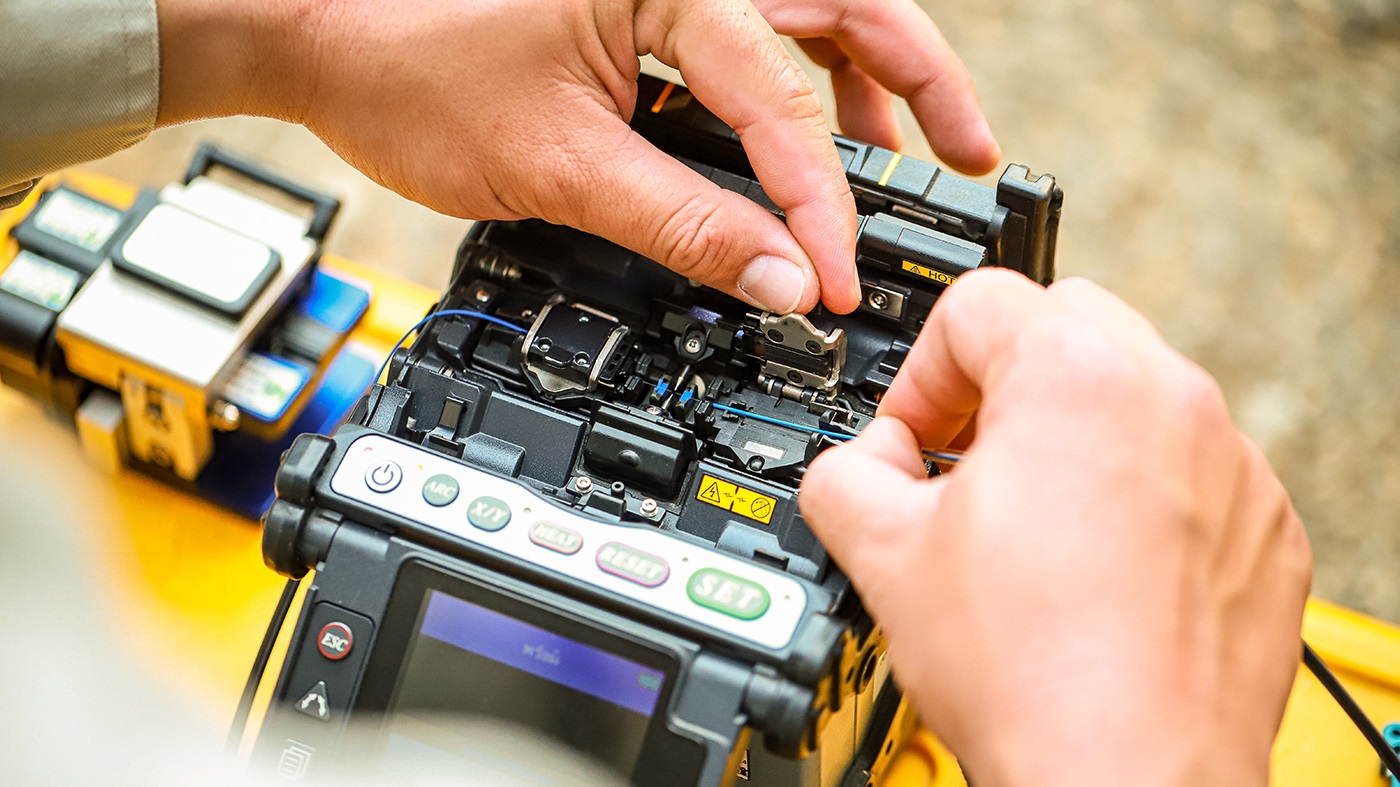
In the first case, special devices and tools are required: an optical fiber fusion splicer, a fiber cleaver, and a stripper for stripping and preparing fiber for splicing.


Pic 1. Tools and equipment for fiber optic cable installation.
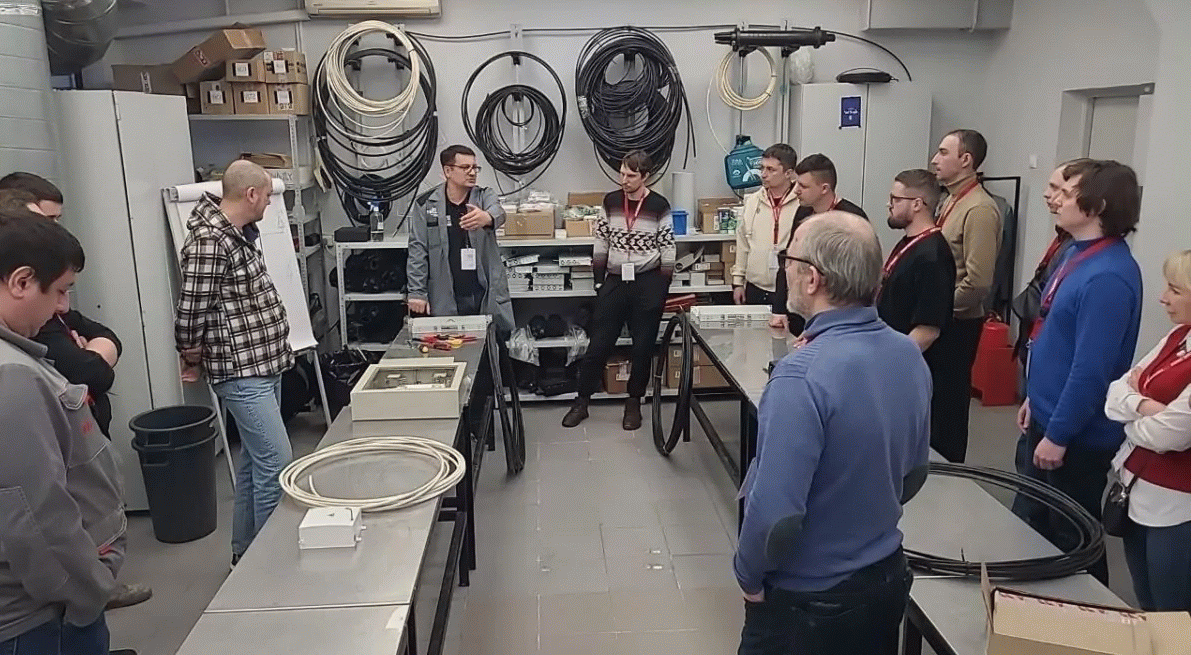
If using a special mechanical connector containing immersion gel, you will only need a workbench, a stripper, and a cleaver.


Pic 2. Mechanical fiber optic connectors and a workbench.
However, having all the necessary equipment does not guarantee a high-quality connection or a successful fiber splice in general. In addition to the equipment, one must possess special skills in working with it and know how to properly prepare the optical fiber for splicing and protect it correctly after splicing to prevent future damage.
Under everyday conditions and with improvised tools, an ordinary person will not be able to splice optical fiber; it is necessary to call in a specialist in fiber-optic communication lines who specializes in fiber splicing. Such specialists work for telecommunications service providers.

Written by Vasiliy Grodetskiy | CTO of Splice.me
With over 20 years of experience in fiber network engineering, Vasiliy has been directly involved in the evolution and deployment of fiber infrastructure worldwide. Vasiliy brings deep expertise in industry standards, regulatory environments, and the practical trade-offs between different approaches to fiber network roll-out.