The purpose of any transmission line is to transmit a signal from one point to another with minimal loss, as some degree of attenuation is unavoidable in the physical world. In fiber-optic networks, there are three main causes of signal attenuation. These are intrinsic losses in the optical fiber, losses due to excessive fiber bending, and losses at connections – both spliced and connector-based.
While intrinsic fiber losses cannot be influenced and unacceptable bending must be avoided, losses at connections during fiber optic line installation should be minimized.
Currently, splice-loss requirements are defined by a document issued in the 1990s. Losses at permanent splices must not exceed 0.3 dB at any wavelength. Additionally, the loss on half of the splices must not exceed 0.15 dB.
Since these standards were developed several decades ago, and both fiber-optic splicing equipment and the fibers themselves have become more advanced, meeting the values specified above is entirely feasible. A modern fusion splice typically exhibits losses in the range of 0.01 – 0.05 dB. Excessive splice losses in backbone communication links can cause total link attenuation to exceed the optical power budget of the transceiver equipment.
Unfortunately, there is no single regulatory document specifying loss standards for spliced connections in access networks or corporate networks, where cable runs are not as long and the optical power budget would allow for splicing fibers with higher losses without compromising the signal. In such cases, organizations typically either follow the aforementioned standards or develop their own technical specifications.
To avoid higher losses at the splice than required by regulatory documents or the customer’s technical specifications, it is necessary to start by selecting the appropriate splicing equipment. Core-alignment fusion splicers generally produce lower-loss splices than cladding-alignment splicers. At the same time, it is important to remember that personnel responsible for splicing and testing optical fibers must be properly trained and qualified..
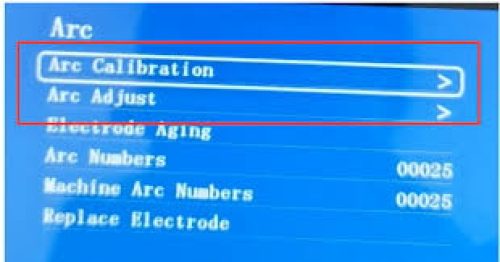
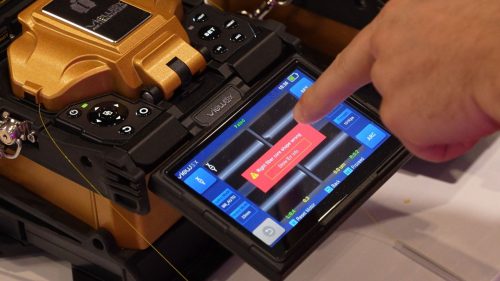
Arc calibration procedure. More about arc calibration here
To minimize losses during splicing, it is recommended to calibrate the arc before starting work, especially if the type of optical fiber or environmental conditions have changed. Also, when splicing different types of fibers, it is necessary to set the appropriate splicing parameters.
Another important factor is proper installation practices and a clean work area. Contamination of the fiber, fusion splicer, or cleaver can result in increased splice loss or complete splice failure. Good fusion splicers are, of course, tested for operation under a wide variety of conditions and temperatures, but splicing should preferably be performed in a controlled environment, such as a dedicated splicing tent or service vehicle.
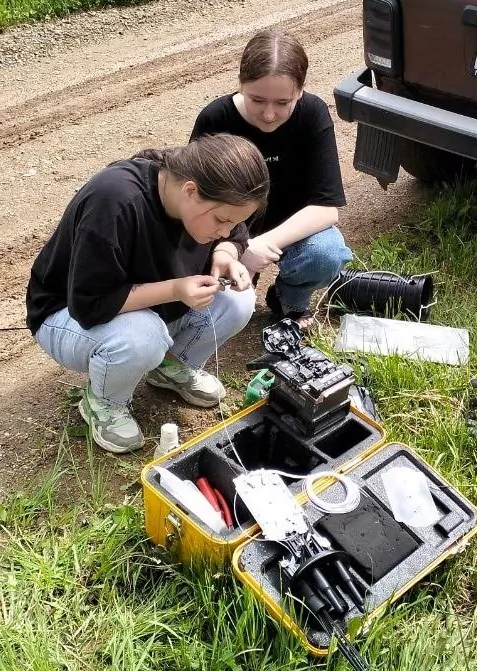
Splicing optical fiber under unsuitable conditions
Splicing optical fibers of the same type and from the same manufacturer will also generally yield good results. Therefore, when selecting components for future installation, it is necessary to carefully review the specifications of all optical cables and patch cords. However, using fibers from different manufacturers does not necessarily present a problem. If all the installation conditions described above are followed, the losses at the splice may be slightly higher, but they will still fall within acceptable limits.
It is important to note that we determine the loss at the splice only as a result of subsequent measurements of the optical cable using a reflectometer. The loss estimates displayed by the fusion splicer should be treated as approximate values and verified through OTDR measurements.

Written by Vasiliy Grodetskiy | CTO of Splice.me
With over 20 years of experience in fiber network engineering, Vasiliy has been directly involved in the evolution and deployment of fiber infrastructure worldwide. Vasiliy brings deep expertise in industry standards, regulatory environments, and the practical trade-offs between different approaches to fiber network roll-out.